 Christopher Columbus Sembuya Foundation
Christopher Columbus Sembuya Foundation
Christopher Columbus Sembuya Foundation
Manufacturing and Industry, Banking and Finance, Insurance, Municipal Development, Associations and Memberships, Education, Agriculture, Culture and Morals, Church and Spiritual Growth, Health Awareness.
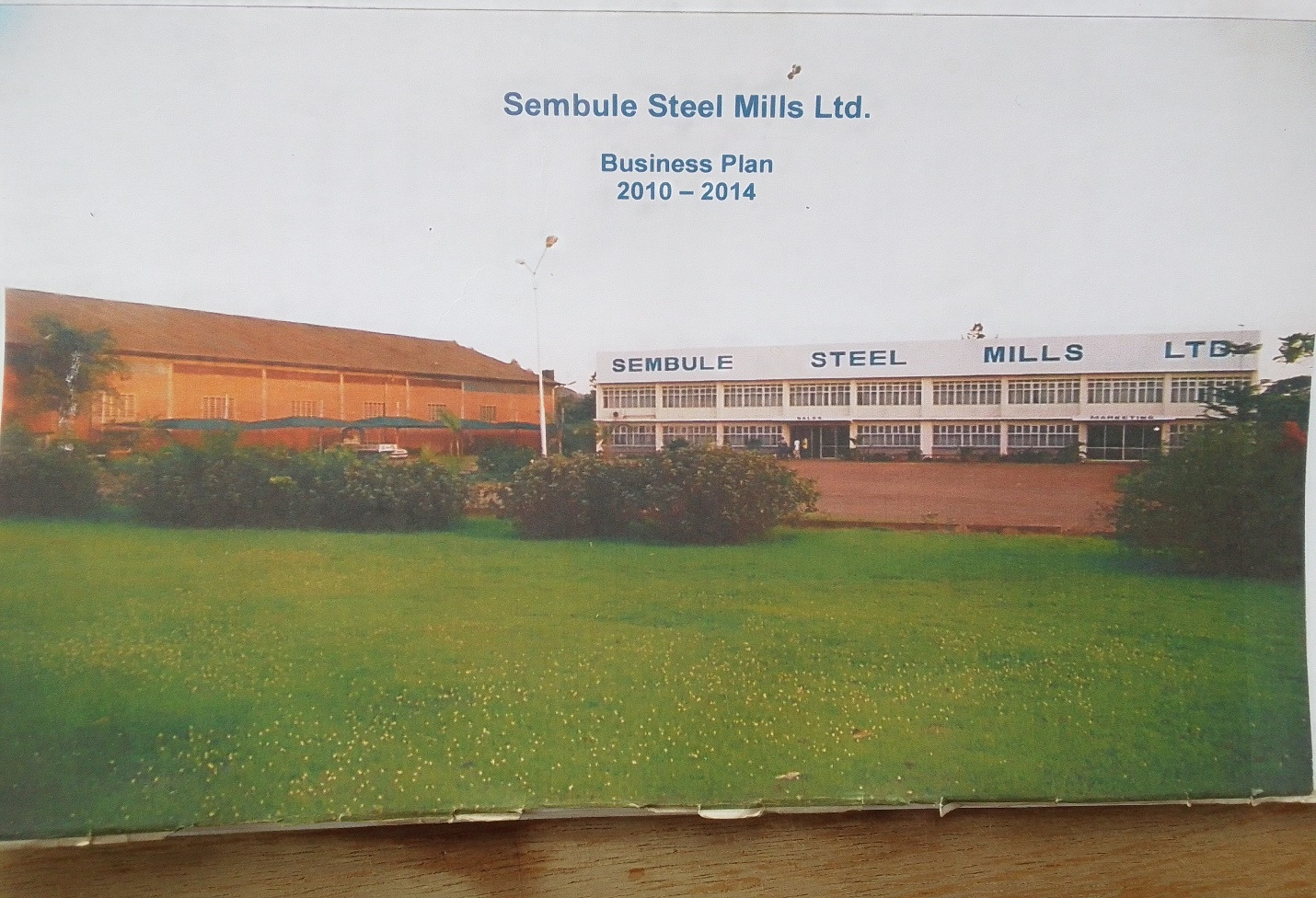
Sembule Steel Mills: A Legacy of Industrial Growth. Located at Plot 1, Nalukolongo Industrial Area, Sembule Steel Mills stands as a testament to the vision and resilience of its founder, Christopher Columbus Sembuya. His journey from a civil servant to an industrialist revolutionized Uganda's manufacturing industry, particularly in steel production.
Get InvolvedIn the late 1960s, Christopher Columbus Sembuya made a bold decision to leave his position as an officer in the Budgeting Department of the Ministry of Finance. This move surprised his colleagues and superiors alike. Sembuya's motivation stemmed from a conversation with his father, Yafesi Magulu — "what would you like to become?" his father asked. "A permanent secretary or a Minister," answered Sembuya. His father, however, dismissed the idea, stating, "You will never catch up with me."
Inspired by this interaction, Sembuya resigned from the Ministry of Finance to pursue private business. He soon realized that his late mother, Lakeri, had left behind a piece of land in Lukooto, Ndeeba. With the support of his maternal uncles, he acquired the land and shared his business vision with his brothers, Mayanja and Henry Wilberforce Buwule. Together, they established Ndeeba Hardware Retail Shop, a venture that later marked the beginning of Sembule Steel Mills.
While Mayanja later moved on to other opportunities, Henry Wilberforce Buwule remained dedicated to growing Ndeeba Hardware. Their first acquisition was an old nail-making machine, which they used to produce and sell nails at a very minimal quantity alongside cement. As an experienced worker in the finance department, Sembuya had big ideas for growing his business. He had chosen steel as his product and embarked on manufacturing, not only importation. After acquiring new machines from Germany, he bought land in Nalukolongo and invited his brother Henry Wilberforce Buwule to be his business partner. Sembuya rewarded Buwule for his devotion, hard work and commitment — as partners they formed "Sembule," joining their two names together: Sembuya and Buwule. A new factory in steel was established at Plot 1, Nalukolongo Industrial Area.
Between 1971 and 2001, Christopher Columbus Sembuya expanded Sembule Steel Mills into a major player in Uganda's steel industry. Having trained with the International Monetary Fund (IMF) in Washington, D.C., he possessed a high-level understanding of financial management and budgeting.
Sembuya leveraged his expertise to build strategic relationships with financial institutions, including the Central Bank of Uganda and commercial banks. As an importer, he maintained strong connections with foreign exchange control departments and collaborated with other industry leaders such as Uganda Baati and Casements. Additionally, he established partnerships with construction firms like Roko Construction Uganda and Nalin of Kenya. Frequent business trips to India further exposed him to advanced manufacturing techniques, which he incorporated into Sembule Steel Mills.
A key figure in his business network was K.C. Patel, the owner of Kikagati Shop in Kampala during the 1970s. These relationships played a crucial role in the company's growth and development.
The Christopher Columbus Sembuya Foundation seeks to revive and promote the industrial growth philosophy championed by C. Sembuya. His story represents the determination of an African Ugandan entrepreneur who, alongside his team, transformed the steel manufacturing landscape from 1970 to 2022. His legacy serves as an inspiration for the current generation to invest in industrial development and contribute to economic growth.
Sembule Steel Mills remains a symbol of innovation, resilience, and strategic growth. The company's journey underscores the importance of visionary leadership, financial literacy, and strategic partnerships in achieving industrial success — paving the way for future generations to build on this remarkable legacy.
This story was from a face-to-face conversation with Christopher Columbus Sembuya, written by Rita Ddungu Sembuya.
The story of Sembule Steel Mills Ltd feeds into the story of Sembule Investment Finance — the latter is a continuation of the former. In 1984, Christopher Columbus Sembuya, chair and CEO of the Sembule Group of Companies, visited a bank in Kenya which he believed had been started by Africans of Kenyan origin. He questioned why all banks in Uganda were foreign-founded, and shared his thoughts with his board and business partner Henry Wilberforce Buwule.
Get InvolvedBecause of his wide connections within Uganda's monetary systems, C. Sembuya was able to seek consultancy from experts in banking and finance who supported the cause — among them the late Dr. Suleiman Kiggundu, Governor of the Bank of Uganda at the time, Mr. Leo Kibirango, formerly Governor of the Bank of Uganda, Mrs. Sarah Odongo, and Mr. Obura — all key personalities at the central bank.
By the early 1980s, Sembule Steel Mills was a very prosperous business with high capital accumulation and massive deposits. This made it possible for Sembule Steel Mills to provide the reserve funds required by the central bank to start a bank. With the personnel and expertise in place, the process began.
By 1984, Sembule Investment Finance was born and incorporated in the Republic of Uganda. Dr. Suleiman Kiggundu, then Governor of the Bank of Uganda, and Mr. Leo Kibirango, his predecessor, graced the occasion. A bank founded and started by an African man was established to offer services for the people of Uganda and East Africa — a milestone on the record of Christopher Columbus Sembuya, a Ugandan entrepreneur (1936–2022). The fact that C. Sembuya used his private company's resources to start the bank shows his philanthropic spirit for this country, Uganda.
"Christopher Columbus Sembuya, we celebrate you."
— Bank of Africa Accolade, 2021, honouring the bank's founderIn his later life, C. Sembuya remained a client of the Bank of Africa and kept his current account in the same bank. At the time of his passing, the bank attended his funeral and eulogized his great contribution — supporting the family both in spirit and financially. The Christopher Columbus Sembuya Foundation brings about this chronology of the bank's founding to project C. Columbus Sembuya's work as an African Ugandan business entrepreneur with big ideas.
Pan World Insurance Company (U) Ltd. The birth of Pan World Insurance Company Ltd is almost the same story as Sembule Investment Finance Ltd — like giving birth to twins, one comes first and the other a few hours later.
Get InvolvedChristopher Columbus Sembuya saw an insurance company in Kampala, Uganda, and discovered that it was started by an African Ugandan man — Statewide Insurance Company (SWICo). In the same way he was compelled to start the bank, he felt that the Ugandan population needed an insurance company of an indigenous nature. He passed the idea to his board and partner Henry Wilberforce Buwule, and was incorporated into the insurance business much as he had been with banking.
A number of interested parties came on board and the initiation of Pan World Insurance Company propelled forward. By 1986, Pan World Insurance Company was born — an insurance company started by an African Ugandan man, with offices on Kampala Jinja Road.
In its expansion program, Pan World found partners in Tanzania and connected with Arusha. During the privatization process, Pan World ventured into possession of the former Nile Hotel — present-day Serena Hotel. (The precise connection between insurance and the hotel is not clearly documented, but those who worked at Pan World may be able to enlighten this further.)
Founded by an African Ugandan man, born and raised in Kikwanyi, Nkokonjeru, Buikwe District, Kyaggwe County.
Projects and initiatives by the Sembule Group in partnership with local municipalities across Uganda — including Kampala City, Nkokonjeru Town, Entebbe Town, and Jinja Municipality — continuing CCS's commitment to civic improvement and infrastructure development.
Get InvolvedIn the early 1990s, Sembule Electronics — a division of the Sembule Group — won a landmark tender to provide traffic and street lighting for the city of Kampala. This was the first time a Ugandan company secured such a major contract for city services.
In addition to managing street lighting, Sembule Electronics produced electronic appliances such as radios and televisions under the popular brand name "Sembule Makula." These radios, which could operate on batteries or electricity, became favorites among Ugandans in both urban and rural areas. The division later expanded into tele-electronic equipment, manufacturing telephone sets, switchboards, and transformers for offices, with technology transfer coming from India through Sembuya's business connections.
Sembule International Ltd, another entity in the group, focused on projects in Entebbe — successfully tendering to install street lights along the Kampala–Entebbe road and managing maintenance and repairs on these traffic lights until 2005. The company also expanded into construction, winning major tenders for ministries, universities, hospitals, and private businesses in Uganda.
As part of its consolidation efforts, Sembule Steel Mills advanced its operations by establishing a steel rolling mill — processing and smelting steel locally rather than relying solely on imported iron bars, enhancing the quality of steel available in the market and contributing significantly to the growth of Uganda's construction industry.
The group diversified into technology with ATC Sembule, venturing into the production of computers and cell phones — opening the door for greater participation of African entrepreneurs in the mobile technology market. Christopher Sembuya also played a key role in launching a television venture, Cable Television (CTV), through strategic partnerships, helping spur local interest and investment in the radio and television industry.
Nkokonjeru, the birthplace of C. Columbus Sembuya, holds a special place in his heart. His father, a prominent farmer in Kyaggwe, owned over 250 acres of cocoa farms in Kikwayi and Lugonjo, employing around 200 workers. Managed by H.W. Buwule, development initiatives aimed to elevate Nkokonjeru to town status — including a reliable water supply, infrastructure in the town center and suburbs, designated business areas, and systematic residential plots.
Jinja was also a focus of municipal development under the leadership of C. Sembuya and his board of directors. Sembule Commercial Bank established a branch on Jinja Main Street to extend banking services to the people of Busoga. C. Sembuya fostered strong relationships with influential figures, including Henry Wako Muloki, the Kyabazinga of Busoga, and government ministers of the time — Jinja being a traditional industrial hub strategically important for expanding business and banking services.
From 1986 to mid-2010, Sembule Commercial Bank operated a branch in Nkokonjeru. C. Sembuya and his brother Buwule also supported the ongoing development of the cocoa farms inherited from their father, and oversaw the "Magulu Day and Boarding Primary School," founded by Mzee Yafesi Magulu — maintaining strong ties with local religious institutions throughout.
Written by Rita Ddungu Sembuya and edited by Patricia Namulumba.
Christopher Columbus Sembuya is among the founders of the Uganda Manufacturers Association (UMA), launched and registered on 20th April 1988. He was an active participant in this formation — his humble nature sometimes placed him in backstage operations, but there he worked extremely hard to achieve every task. He was given the opportunity to purchase a plot in the UMA complex, known as the Sembule Complex.
Get InvolvedDuring UMA shows and exhibitions, Sembuya's company produced some of the best exhibits. On two occasions they were named best exhibitors and were personally awarded by President H.E. Yoweri Kaguta Museveni.
C. Sembuya fully participated in the activities of the association — during exhibits or dialogues with government, he always attended members' meetings. He had a deep passion for seeing the growth of Ugandan business entities. Today, UMA is a vibrantly expanded association with a large and very functional membership.
"Sembuya was his father, and Kayemba was his economic son."
— Mr. Deo Kayemba, current Chair of UMA and former colleague at Sembule Steel Mills, at C. Sembuya's funeral serviceThe Education Program is inspired by the practices and legacy of Christopher Columbus Sembuya. This initiative is dedicated to preserving and extending his contributions for future generations.
Get InvolvedChristopher Columbus Sembuya was a lifelong learner and avid reader. Every morning, he began his day with newspapers such as Bukedde and New Vision, sharing interesting news with others. His diverse reading interests included:
At home, he encouraged his children to excel academically and supported many young adults in achieving their academic success. Sembuya is also the author of The Other Side of Idi Amin Dada, in which he shares his perspective on Uganda's economic history.
Beyond his academic interests, Sembuya was passionate about sports and recreation. He enjoyed playing football and tennis, and for indoor activities, he played games like Omweso and cards. During his time at St. Leo Kyegobe Tooro High School, he participated in marathons — showing determination even when he wasn't the fastest. Later, his adventurous spirit led him to mountain climbing, including an expedition to the peak of Mount Kilimanjaro. His lifelong commitment to scouting was evident in his active involvement in the Boy Scouts.
Sembuya was also deeply involved in his church. He consistently praised God and humbly devoted himself to his faith. As a businessman and producer, he encouraged the clergy to engage in economic projects, demonstrating his generosity by sharing knowledge and supporting new ventures. His vision for Uganda's economy was clear: he believed in the country's potential to reach great heights, and frequently inspired young people to pursue business and entrepreneurial success.
This foundation is committed to engaging learners in skill development, transforming education into a powerful tool for personal and community growth.
Honouring his father Mzee Yafesi Magulu's legacy as a prominent cocoa and crop farmer in Kyaggwe — who owned over 250 acres of cocoa farms in Kikwayi and Lugonjo and employed around 200 workers — this program continues to support agricultural initiatives rooted in that same family tradition.
Get InvolvedPreserving and promoting the cultural and moral values that guided Christopher Sembuya throughout his life and that he wished to pass on.
Supporting spiritual development and church-based community initiatives reflecting CCS's own faith and values.
Continuing health advocacy work, including support inspired by Rita Sembuya's founding of the Joyce Fertility Support Center Uganda.
Every program continues a piece of Christopher Columbus Sembuya's legacy. Reach out to learn how you can contribute.
Contact the Foundation